Journal — 2026
Nerida — Born Between Sky and Sea
ἡ Νηρηΐς
Some forms begin with a sketch. Others begin with a moment that appears unexpectedly and disappears before it can be fully understood.
Nerida was born during a journey by ship from Ithaka.
I was looking at the sea as the vessel moved steadily through the water. Above it, clouds crossed the sky, their forms reflected across the surface below. But the reflection was not still. The movement of the ship gently disturbed the water, stretching the clouds, breaking their outlines and allowing them to come together again in new and unfamiliar shapes.
For a few moments, the sea was no longer simply reflecting the sky. It was transforming it.
The clouds became fluid. Their soft volumes were drawn into long curves, compressed into darker hollows and opened again by the movement of the water. Every passing second produced a different composition. Nothing remained fixed, yet there was a clear rhythm connecting one form to the next.
I was fortunate enough to notice it.
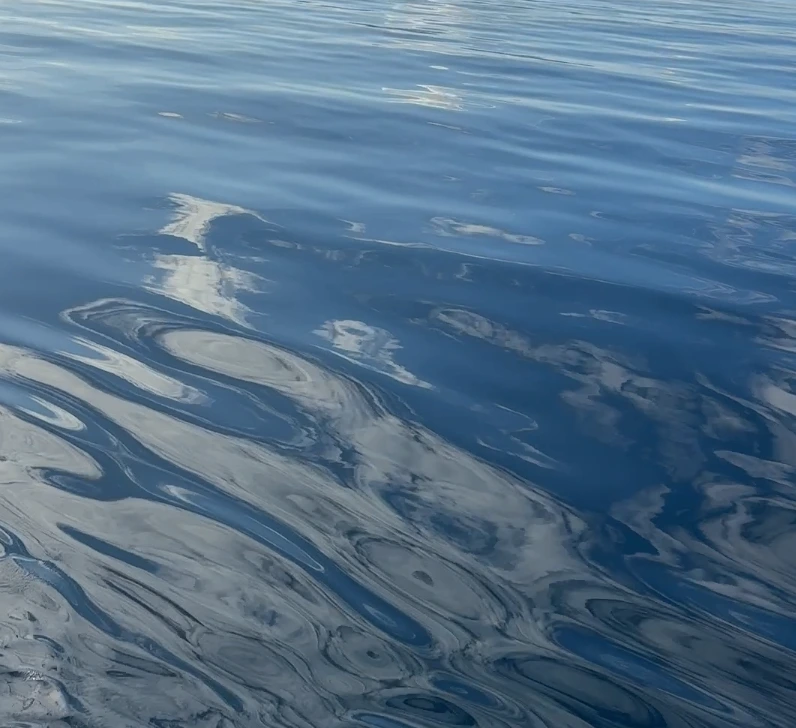
It was a quiet and fleeting scene, the kind that can easily disappear unnoticed during a journey. The ship continued forward, the water changed, and the image was soon gone. Yet the movement remained in my mind: the depth of the blue, the softness of the reflected light and the continuous transformation of one curve into another.
That observation became the starting point for Nerida.
The chair was not designed as a literal representation of a wave, a cloud or the sea. It does not attempt to reproduce nature as an image. Instead, it carries the memory of what I saw: the sky reflected on water, gently displaced by motion, becoming a form that seemed to exist somewhere between the two.
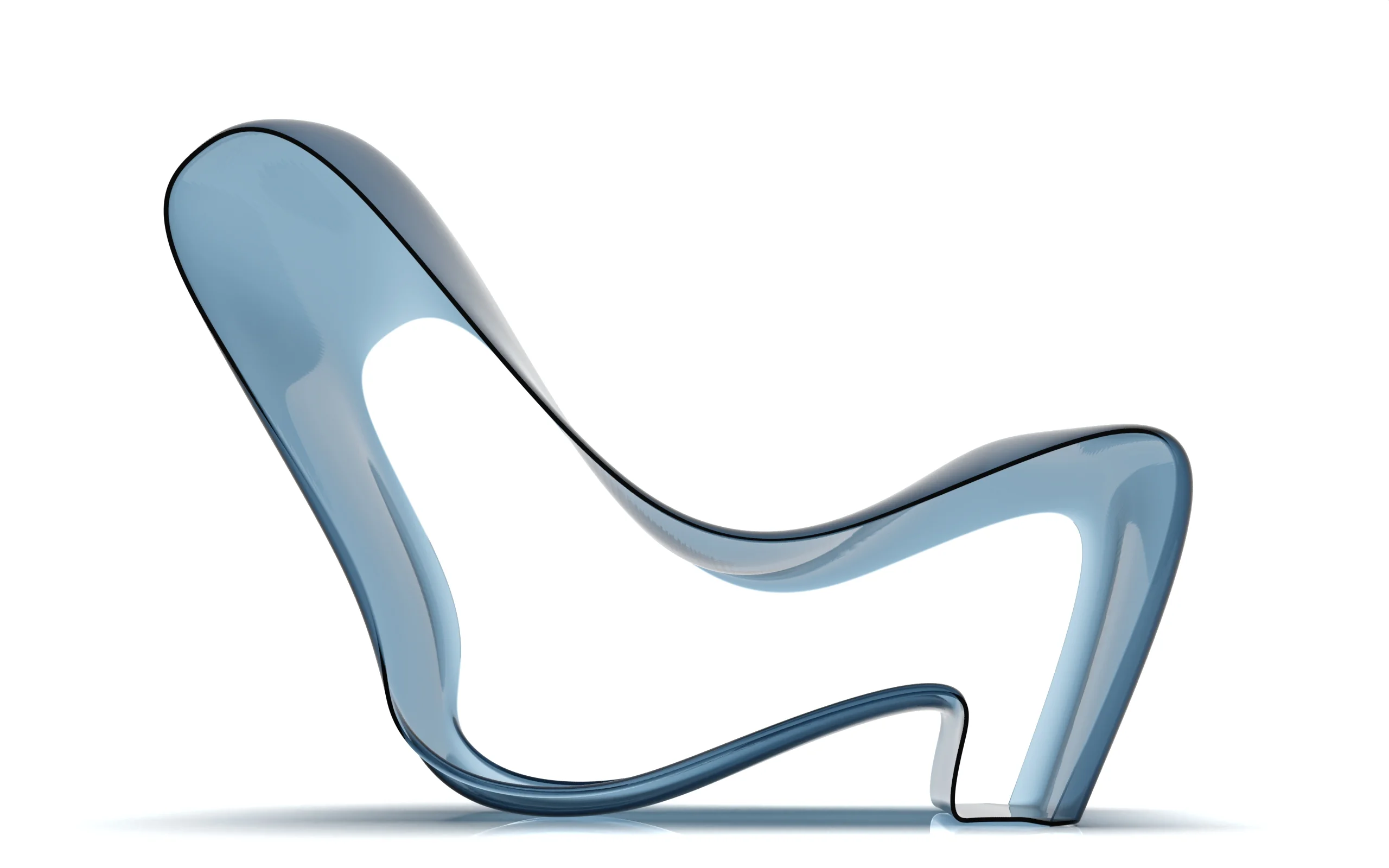
Its silhouette follows that same visual rhythm. The body of the chair rises and falls through a continuous sequence of curves. Surfaces fold into one another without abrupt interruption, creating areas of openness, depth and support. The form appears to move even when it is still, as though it has been captured during a slow transformation.
The seat emerges from the same gesture as the back and the sides. There is no clear separation between structure and surface, or between the part that supports the body and the part that gives the object its identity. Each curve continues into the next, allowing the chair to feel less like an assembly of components and more like a single movement held in space.
This continuity was essential to the design.
Water does not divide itself into separate elements. A wave does not begin at one point and end neatly at another.
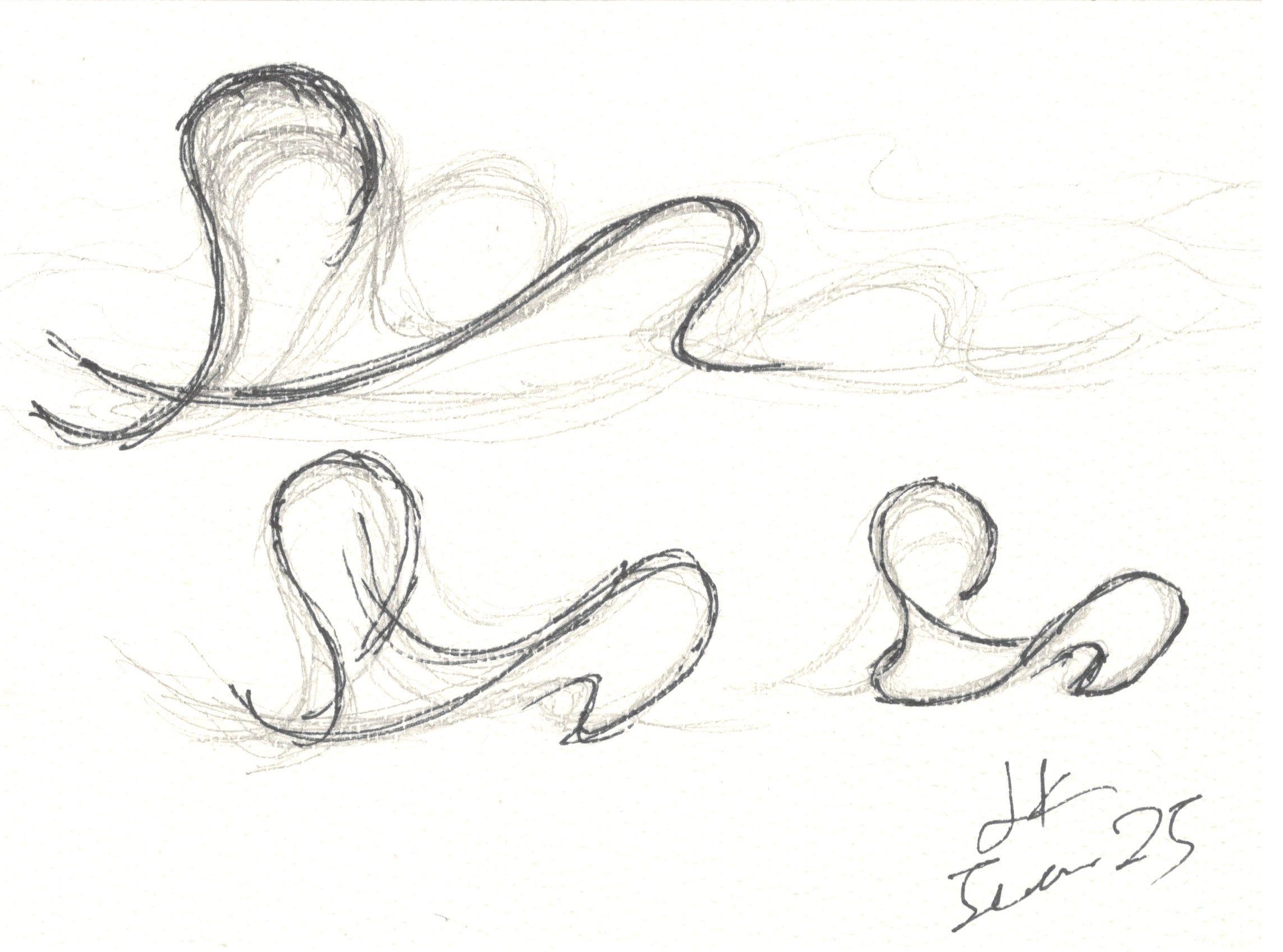
Its form is understood through transition, tension and release. Nerida follows this principle, allowing every line to develop naturally from what comes before it.
The chair surrounds the body without enclosing it. Its curves create a sense of protection, while its open structure preserves lightness and visual movement. It invites the body to settle into its form, not through rigid geometry, but through gradual changes in height, depth and direction.
The name Nerida comes from the Nereids, the sea nymphs of Greek mythology. They were associated with the changing character of the sea: its beauty, mystery, calmness and movement. The name felt connected not only to the origin of the chair, but also to its presence. Nerida appears almost as if it has surfaced briefly from another world, carrying the fluidity of water into a solid and inhabitable form.
There is also something elusive in the way the chair is perceived. From one angle, its curves appear calm and balanced. From another, they become more dynamic, revealing deeper shadows and unexpected transitions. Like the reflection that inspired it, the form changes according to light, perspective and movement around it.
Nerida is therefore not an imitation of the sea. It is the translation of an experience.
It is the memory of a journey from Ithaka, of a ship moving through blue water, and of clouds momentarily losing their familiar shape. It began with something fragile and temporary, but through design, that moment was given permanence.
The sea continued moving. The clouds disappeared. The ship travelled on.
The form remained.
— Harry Konstantinou, IDEA34